How can I use big data analytics for fraud detection?
Fraud is defined as “deception deliberately practiced in order to secure unfair or unlawful gain.” Organizations and government agencies across the globe face a constant battle against a litany of threats, many of which can lead to catastrophic financial losses, stolen intellectual property, comprised customer data, and much more.
How Fraud Impacts Organizations
Fraud can impact organizations in a variety of ways. According to PwC’s “Global Economic Crime Survey”, 1 in 3 organizations report being hit by economic crime. While every organization deals with fraudulent activities, Financial Services and Retail are the most commonly reported industries. 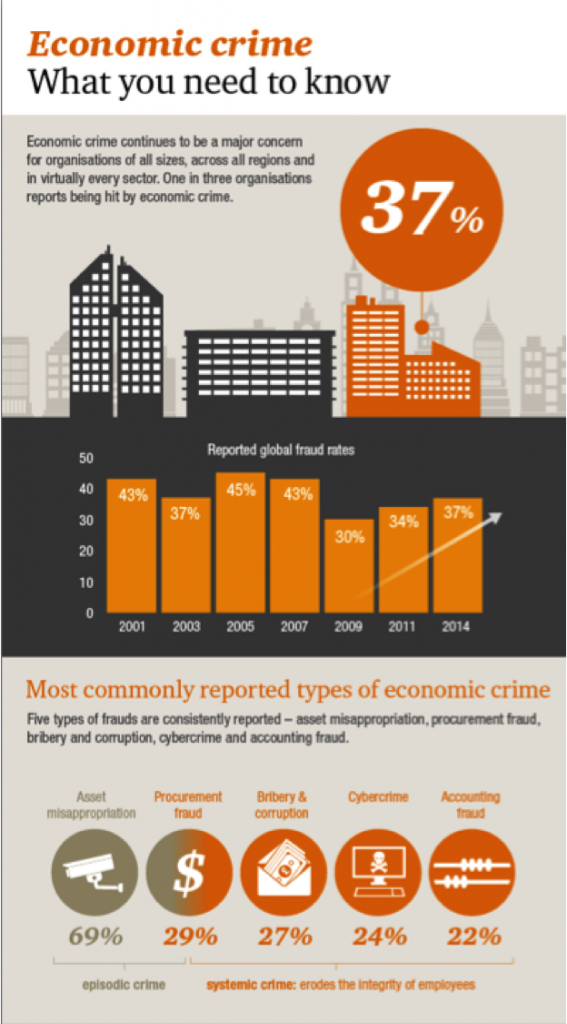
Retail organizations such as Neiman Marcus and Target have reported massive security breaches where millions of customer’s payment information, among other information, was stolen. This has a significant impact not just on the organization but individuals as well. Target released a statement saying that their “guests will have zero liability for the cost of any fraudulent charges arising from the breach” and they are going to offer “one year of free credit monitoring and identity theft protection to all guests who shopped our U.S. stores”. I’m sure this has had a significant impact to their bottom-line, not to mention the bad press, skyrocketing liability insurance costs, and more.
Finance is another industry that deals with a high volume of various types of fraud. We all remember Bernie Madoff, former Chairman of Nasdaq, and his Ponzi scheme, but what about other kinds of fraud the financial services industry is facing? There is mortgage fraud, check fraud, financial advisor fraud, and much more. Fraud can cripple an organization and impact things such as employee morale, brand, share prices, and business relations.
According to Kroll’s Global Fraud Report 2013/14, over the past 12 months, 70% of the companies reported at least one type of fraudulent activity. This is up from 61% the previous 12 months. Also, information theft is the 2nd most common type of fraud. In 2012, 7% of the companies reported they were highly vulnerable to information theft and 21% in 2013, this is a 200% increase!
Big Data Analytics for Fraud Detection
So enough about how prevalent fraud is, the types, and how it can impact organizations. We’d now like to talk about what can you do to help protect your organization from fraud.
While there is no silver bullet to detecting and preventing fraud, and since we are a data analytics software organization, we like to take this time and speak about big data analytics for fraud detection. While threats are evolving and becoming more sophisticated, it’s making it more difficult to detect these threats in a reasonable timeframe. The various data types and information publicly available makes this increasingly difficult to defend. The size of your organization does not matter. What does matter is…if fraud is prevalent, a constant threat, and has a significant impact to your business unit or organization you should be looking for ways to improve how fraud is detected.
If you don’t currently have a big data analytics solution in place, this would be a good place to start when looking for how to make improvements. Now, to clarify some terminology, and in this case, “big data analytics” is really just marketing speak for a solution that:
-
Connects multiple/various applications and/or data sources together
-
Enriches this data
-
Allows the data to be queried and visualized for further analysis, providing deeper insights and answers
The amount of data isn’t necessarily that important, which can be misleading when you hear the term “big data”. The ability to fuse existing data (from various applications and sources) with open data (ie social media, websites, blogs) is what this type of solution more unique.
How to get started?
So how do you get started with a big data analytics solution for fraud detection? For starters, I would suggest reading this blog post. Not just for fraud solutions but for any analytical project you may be facing.
Getting started isn’t as complicated as you might think. One of our partners worked with a Swiss investment bank that was investigating one of the largest real-estate bankruptcies in Switzerland’s history. After 2 years of unsuccessful attempts, trying various solutions, the investment bank brought in our partner. Utilizing our platform and within one week our partner was able to connect and analyze various data types which lead to the recovery of over $10 million in assets.
It is no secret that a combination of the right data and smart analytics can help combat fraudulent activities. While most organizations are capturing data and performing analytics, they are either (1) keeping this data siloed, limiting the analysis that can be performed or (2) only looking at structured data which is giving them only a small subset of information. Both are causing them to make critical decisions with incomplete information.
Using a more holistic, intelligence-based approach, your organization can capitalize on the influx of information not just from your existing data but from additional unstructured data such as social media, blogs, news, emails, chat messages, and more.
Please contact us if you would like to learn more about how Ikanow can provide a big data fraud detection solution for your organization.
Share on FacebookShare on TwitterShare on Google+Share on Linkedin
How can I use big data analytics for fraud detection?
How can I use big data analytics for fraud detection?
Fraud is defined as “deception deliberately practiced in order to secure unfair or unlawful gain.” Organizations and government agencies across the globe face a constant battle against a litany of threats, many of which can lead to catastrophic financial losses, stolen intellectual property, comprised customer data, and much more.
How Fraud Impacts Organizations
Fraud can impact organizations in a variety of ways. According to PwC’s “Global Economic Crime Survey”, 1 in 3 organizations report being hit by economic crime. While every organization deals with fraudulent activities, Financial Services and Retail are the most commonly reported industries.
Retail organizations such as Neiman Marcus and Target have reported massive security breaches where millions of customer’s payment information, among other information, was stolen. This has a significant impact not just on the organization but individuals as well. Target released a statement saying that their “guests will have zero liability for the cost of any fraudulent charges arising from the breach” and they are going to offer “one year of free credit monitoring and identity theft protection to all guests who shopped our U.S. stores”. I’m sure this has had a significant impact to their bottom-line, not to mention the bad press, skyrocketing liability insurance costs, and more.
Finance is another industry that deals with a high volume of various types of fraud. We all remember Bernie Madoff, former Chairman of Nasdaq, and his Ponzi scheme, but what about other kinds of fraud the financial services industry is facing? There is mortgage fraud, check fraud, financial advisor fraud, and much more. Fraud can cripple an organization and impact things such as employee morale, brand, share prices, and business relations.
According to Kroll’s Global Fraud Report 2013/14, over the past 12 months, 70% of the companies reported at least one type of fraudulent activity. This is up from 61% the previous 12 months. Also, information theft is the 2nd most common type of fraud. In 2012, 7% of the companies reported they were highly vulnerable to information theft and 21% in 2013, this is a 200% increase!
Big Data Analytics for Fraud Detection
So enough about how prevalent fraud is, the types, and how it can impact organizations. We’d now like to talk about what can you do to help protect your organization from fraud.
While there is no silver bullet to detecting and preventing fraud, and since we are a data analytics software organization, we like to take this time and speak about big data analytics for fraud detection. While threats are evolving and becoming more sophisticated, it’s making it more difficult to detect these threats in a reasonable timeframe. The various data types and information publicly available makes this increasingly difficult to defend. The size of your organization does not matter. What does matter is…if fraud is prevalent, a constant threat, and has a significant impact to your business unit or organization you should be looking for ways to improve how fraud is detected.
If you don’t currently have a big data analytics solution in place, this would be a good place to start when looking for how to make improvements. Now, to clarify some terminology, and in this case, “big data analytics” is really just marketing speak for a solution that:
Connects multiple/various applications and/or data sources together
Enriches this data
Allows the data to be queried and visualized for further analysis, providing deeper insights and answers
The amount of data isn’t necessarily that important, which can be misleading when you hear the term “big data”. The ability to fuse existing data (from various applications and sources) with open data (ie social media, websites, blogs) is what this type of solution more unique.
How to get started?
So how do you get started with a big data analytics solution for fraud detection? For starters, I would suggest reading this blog post. Not just for fraud solutions but for any analytical project you may be facing.
Getting started isn’t as complicated as you might think. One of our partners worked with a Swiss investment bank that was investigating one of the largest real-estate bankruptcies in Switzerland’s history. After 2 years of unsuccessful attempts, trying various solutions, the investment bank brought in our partner. Utilizing our platform and within one week our partner was able to connect and analyze various data types which lead to the recovery of over $10 million in assets.
It is no secret that a combination of the right data and smart analytics can help combat fraudulent activities. While most organizations are capturing data and performing analytics, they are either (1) keeping this data siloed, limiting the analysis that can be performed or (2) only looking at structured data which is giving them only a small subset of information. Both are causing them to make critical decisions with incomplete information.
Using a more holistic, intelligence-based approach, your organization can capitalize on the influx of information not just from your existing data but from additional unstructured data such as social media, blogs, news, emails, chat messages, and more.
Please contact us if you would like to learn more about how Ikanow can provide a big data fraud detection solution for your organization.
Tags: