Crisis informatics - the application of information technology to aid in the mitigation of and response to natural and man-made disasters, is an increasingly growing field. Social media tools have democratized information flows enabling individuals affected by crisis to act not only as passive recipients, but active collection nodes. The key challenge in these crisis situations is usually that established infrastructure or communication channels are shut down or disrupted. The fact that people can broadcast on their own helps cut through the fog of war – but only if the tools are available to winnow down non-useful messages.
Here are a five tools you should look for in any software solution you implement to leverage social media for disaster recovery:
- Language tools – disasters don’t exactly follow man-made boundaries and often large events end up having international responses. Many social media tools only work well on the data from the host language. Make sure any tool you implement can handle most major languages.
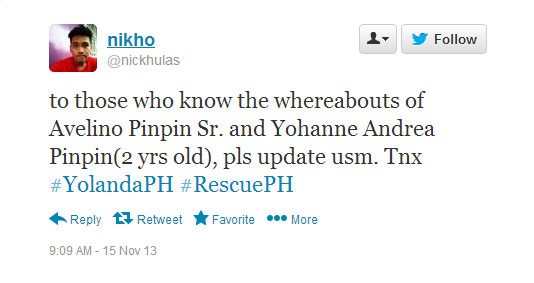
- Filtering tools – the fact that social media lets everyone broadcast is a double edged sword. A relief team looking for individuals in distress has to wade through hundreds of other messages just wishing people were safe. During Typhoon Haiyan / Yolanada, rescuers encouraged individuals to use the hashtag #RescuePH when they needed help; but many people on Twitter just started using it for general comments about the storm. Filters to screen for appropriate messages can turn a feed of tweets that look like this:
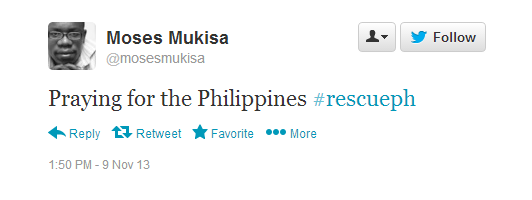
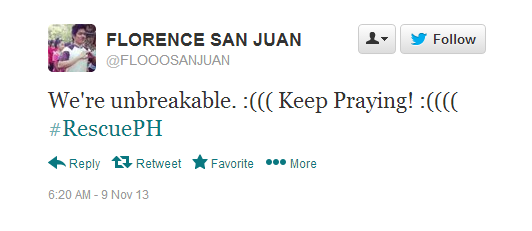 Into this…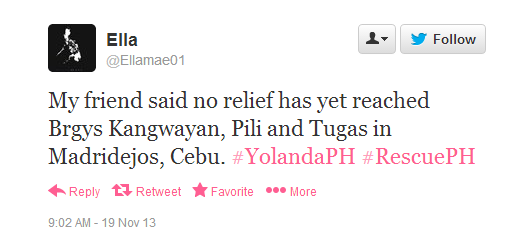
- Archive Tools – not only is it difficult to find relevant social media; but keeping track of it can also be difficult. Tools with the capability to tag, store, or archive social media posts will help your organization keep track of important messages. You should be able to organize media around relevant operational documents, preferably on some shared space to allow for collaboration. There’s no telling who will find the next update to a piece of relevant information, especially in fluid situations like disaster relief.
- Layering Tools – social media messages will often contain incomplete information. To make the most use of them, it’s necessary to layer in additional data sets to make sense of what’s going on. As an example, a tweet or Facebook post may make reference to a location that is not immediately identifiable as a geolocation. Having the ability to layer key infrastructure over the location’s mentions in social media messages may reveal soft relationships between incidents. It’s only in context of one another and with other data that social media messages may begin to make sense.
- Geolocation Tools - social media messages rarely are tagged to specific places. This problem is a lot like the one above, but it’s worth its own section because of how important it is to know where a message is coming from if at all possible. A person may tweet for help, but the tweet may not have any geotag that can be plotted on a map. Only about 5% of tweets actually have geotags and those may often be so unspecific that they’re not helpful. A good geolocation tool can take the ambiguous text of a social media message and provide some context.
A Case Study for Using Social Media Analysis to Improve Future Disaster Response
Social media isn’t just useful during a disaster; it can also help when you want to go back and look at what happened during a crisis to see how an organization responded to data as it became available, or simply to look at how information flowed to try to optimize it for the next disaster.
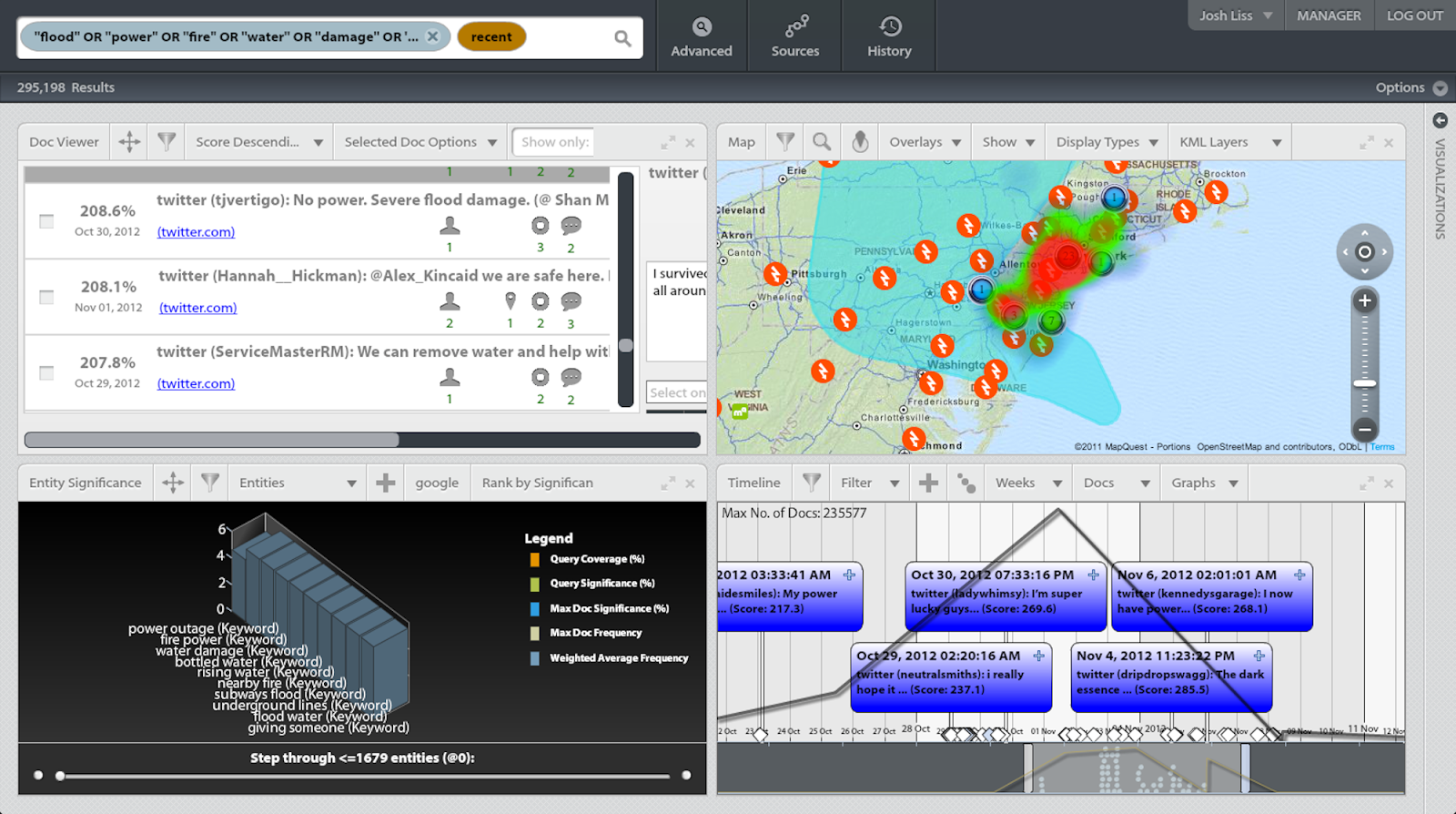
This is precisely what one of our partners, nContext, did for a large insurance company. They integrated large amounts of social media, weather data, and corporate data trying to deal with the impact that Hurricane Sandy had on the insurance company’s client base. The integrated data picture allowed the team to walk through temporal situations to see where social media popped up in response to weather and what resources were available to respond. By watching what happened, the company could determine if they responded appropriately. Further, they can run analytics on their data to determine if particular insurance agents were overloaded. All of these tools allow the insurance company to make smart changes to their policies that will improve their response to future disasters and, ultimately, their bottom line.
Interested in receiving quarterly newsletters from IKANOW?

Learn more from IKANOW:
Visit the Resource Center
Share on FacebookShare on TwitterShare on Google+Share on Linkedin

Five tools your disaster recovery software needs to have when using social media
Crisis informatics - the application of information technology to aid in the mitigation of and response to natural and man-made disasters, is an increasingly growing field. Social media tools have democratized information flows enabling individuals affected by crisis to act not only as passive recipients, but active collection nodes. The key challenge in these crisis situations is usually that established infrastructure or communication channels are shut down or disrupted. The fact that people can broadcast on their own helps cut through the fog of war – but only if the tools are available to winnow down non-useful messages.
Here are a five tools you should look for in any software solution you implement to leverage social media for disaster recovery:
A Case Study for Using Social Media Analysis to Improve Future Disaster Response
Social media isn’t just useful during a disaster; it can also help when you want to go back and look at what happened during a crisis to see how an organization responded to data as it became available, or simply to look at how information flowed to try to optimize it for the next disaster.
This is precisely what one of our partners, nContext, did for a large insurance company. They integrated large amounts of social media, weather data, and corporate data trying to deal with the impact that Hurricane Sandy had on the insurance company’s client base. The integrated data picture allowed the team to walk through temporal situations to see where social media popped up in response to weather and what resources were available to respond. By watching what happened, the company could determine if they responded appropriately. Further, they can run analytics on their data to determine if particular insurance agents were overloaded. All of these tools allow the insurance company to make smart changes to their policies that will improve their response to future disasters and, ultimately, their bottom line.
Interested in receiving quarterly newsletters from IKANOW?
Learn more from IKANOW:
Visit the Resource Center